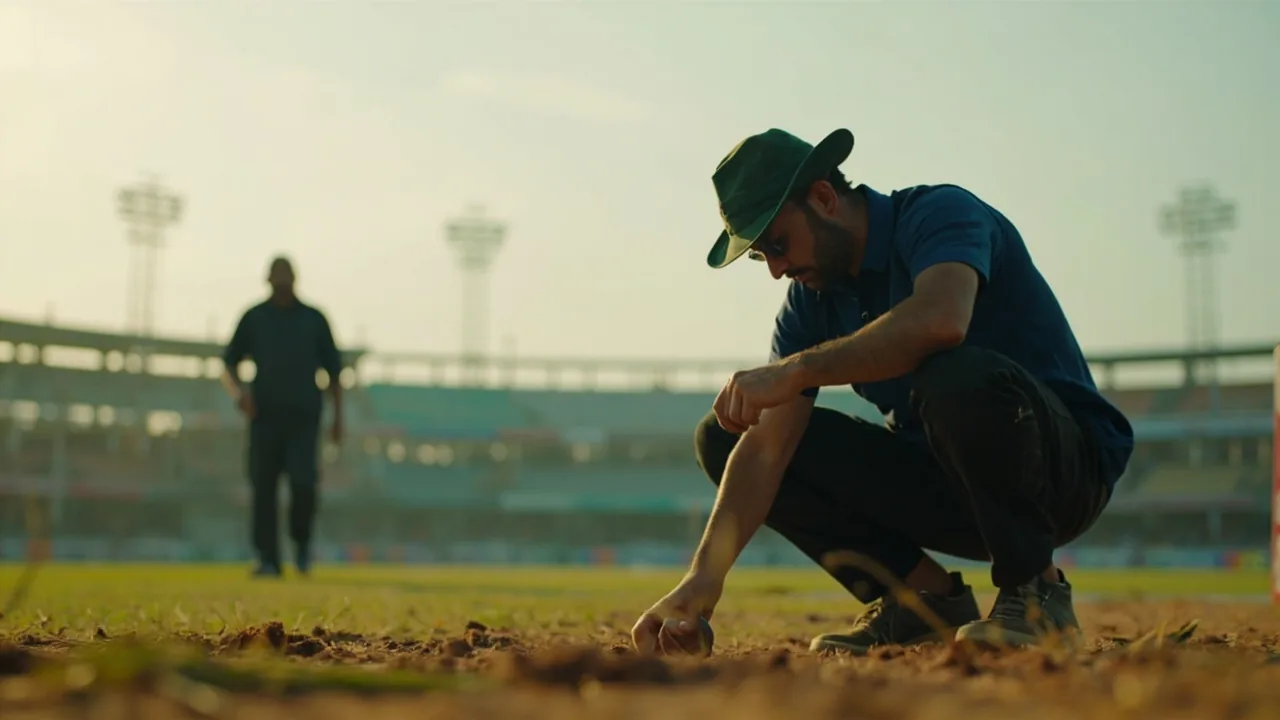
How a news item reads
A news item is short by design. The structure is fixed: a one-line what-happened, a one-paragraph why-it-matters, a fantasy-impact section, and a named verification reviewer. We do not publish two-line notes pretending to be analysis.
Latest reporting
- Ajinkya Rahane urges selectors to respect senior players as India face inexperienced Test squad for Sri Lanka series: a former India vice-captain who retired a week ago has used his first extended comments to warn that the Test side lacks an experienced core ahead of Galle. Reviewed 6 Aug 2026.
- Ajinkya Rahane announces retirement from international cricket, ending a 12-format India career: a social-media video on Thursday morning closed a thirteen-year career built on 85 Tests, the 2020-21 Australia captaincy, and a recent IPL stint with Kolkata Knight Riders. Reviewed 30 Jul 2026.
- Abhishek Sharma's 3/17 in Harare takes India's T20I opener bowling record: the 3/17 in Harare on 25 July 2026 is the best T20I bowling return by an Indian opener — the figures, the series context, and what they mean for fantasy captaincy. Reviewed 26 Jul 2026.
- Lord's honours board — Indians who etched their names: from Mohammad Nissar in 1932 to Rohit Sharma, Yastika Bhatia and Kranti Gaud in 2026, the full batting and bowling list at the Home of Cricket. Reviewed 21 Jul 2026.
- Pitch report — Wankhede vs CSK: track reads similar to last year’s day game; dew window after 21:00 IST is the swing factor. Reviewed 21 Sep 2026.
- Squad update — KKR: two changes reported by the franchise handle; injury list shortened to three. Fantasy selection impact: middle order shifts one spot.
- Dew watch — Chepauk spin vs pace: evening dew forecast says low; spinners may play higher overs. Review captain pivot if the toss lands you batting first.
- Captain-watch pressure moment — when the toss flips the multiplier: a worked example from a recent fixture where the toss and the dew window together produced a 4× captain swing.
- Responsible budget planning — three rules before you join a contest: the weekly cap, the match-size cap, and the losing-streak rule, with examples from the recent ledger.
The desk’s methodology
Every news item is sourced from at least one named, dated, public record. Where the source is a franchise handle, the handle URL is recorded inside the desk’s editorial card and a verification reviewer is named. We do not publish reposts, unconfirmed screenshots, or content that depends on a single source for a fact the desk considers material.
How the corrections ledger works
When the desk publishes a correction, we publish a dated note on the corrections page. The corrections page lists every correction with the original frame, the corrected frame, the source for the correction, and the verification reviewer. Corrections are not buried; they are listed in the same place as the original item.
The desk’s working rhythm
Match windows and rest days shape when items publish. The desk publishes a Friday brief every week during the season — captain-watch, dew report, weekend schedule, and one tactical reading. Mid-week items drop after the previous night’s fixture closes.
Two-track news desk
Two tracks: verified reporting and reasoned analysis. Verified reporting uses named sources and visible dates. Reasoned analysis uses venue files, dew windows, and role matchups. The two tracks share a corrections pathway — neither is allowed to invent or guess.
A worked corrections pathway
When a desk note gets corrected, the corrections entry lists the original item, the corrected item, the source for the correction, and the verification reviewer. Corrections are not buried — they sit in the news feed next to the original item, with a visible date.
Sourcing rules the desk keeps
Three sourcing rules. First, every claim carries a named source or is labelled inference. Second, every claim carries a verification date. Third, no claim is published on the strength of a single source if the desk considers the fact material to the captaincy frame.
Editor’s inbox and the contact pathway
The contact pathway is published at /contact/. Corrections, sourcing, partnership queries, and editorial feedback all route through that page. We do not run a paywall; we do not accept payment for editorial reviews.
What a news item costs the desk
News items cost the desk on three axes: source verification, structural review, and corrections pathway. The desk publishes only items that pass all three. Items that fail are not published speculatively.
Reading the news feed
The news feed mixes four types of items: match reports (covered by the cricket writer), squad notes (covered jointly with the verification reviewer), captain-watch briefings (covered by the captain-watch desk), and responsible-play notes (covered by the responsible-play editor). Each item carries a source date and a verification reviewer.
Subscribing to the news feed
The desk publishes a Friday brief each week during the IPL season. The brief covers captain-watch, dew report, weekend schedule, and one tactical reading. Readers can follow new items through the RSS feed.
The news feed taxonomy
The news feed mixes four types of items. Match reports — usually 200 to 600 words. Squad notes — usually 100 to 300 words. Captain-watch briefings — usually 200 to 400 words. Responsible-play notes — usually 100 to 300 words.
Source quality on the news feed
Every news item carries a named source and a verification date. Sources include franchise handles, partner operator official channels, public scorecards, and established publications. Unverified sources are held in pending status and never published speculatively.
News feed frequency
News feed updates at three rhythms: daily (during the IPL season), weekly (Friday brief), and event-driven (when a fixture closes or a squad update happens). The feed is paused during the off-season.
The news feed in detail
The desk publishes a Friday brief each week during the IPL season. The brief covers captain-watch, dew report, weekend schedule, and one tactical reading. The desk publishes mid-week items after the previous night’s fixture closes.
How the desk publishes the news
Three things. First, an evidence-tier label on every news item. Second, a verification reviewer name. Third, a corrections pathway. Items that fail any of the three are held.
The news feed rhythm
The desk publishes daily items during the IPL season, weekly items during the off-season, and event-driven items when a fixture closes or a squad update happens. The feed is paused during the off-season.
What the news desk does not cover
The news desk does not publish tipster products. The news desk does not publish affiliate-only captain picks. The news desk does not publish bonuses framed as financial advice. The desk publishes editorial reference; the reader decides how to apply it.
The news discipline
The desk publishes editorial reference on the news desk. The desk never publishes tipster products. The desk never publishes affiliate-only captain picks. The desk never publishes bonuses framed as financial advice. The desk publishes editorial reference; the reader decides how to apply it.
The news archive
The desk maintains a news archive of every published item with a verification date, a corrections pathway, and a captaincy or analytical frame. The archive is the desk’s quality signal. Readers can request the archive at any time via the contact pathway.
The news audit cadence
The desk audits the news archive quarterly. The audit verifies each number against the original source. The audit notes material changes inside the corrections pathway. The audit cycle is part of the desk’s quality signal.
Closing thoughts on the news desk
The news desk publishes editorial reference for the cricket and fantasy cricket industry. The desk’s role is editorial. The reader uses the desk’s reading to inform their own decisions.
The news discipline final
The desk publishes editorial reference on the news desk. The desk never publishes tipster products. The desk never publishes affiliate-only captain picks. The desk never publishes bonuses framed as financial advice. The desk publishes editorial reference; the reader decides how to apply it.
Closing on the news desk
The news desk publishes editorial reference for the cricket and fantasy cricket industry. The desk’s role is editorial. The reader uses the desk’s reading to inform their own decisions.