Abhishek Sharma took 3 for 17 with his left-arm spin in the second T20I against Zimbabwe in Harare on Saturday, finishing as India's most efficient bowler on a night when the visitors defended 219 by 90 runs to take an unassailable 2-0 lead in the three-match series. The figures — three wickets at an economy well under six from a part-time option who had bowled only because the team needed overs — are the best T20I bowling return by an Indian opener in the format's history.
It is not the headline number fantasy players will quote over the weekend. That one still belongs to Ishan Kishan, whose 81 from 46 balls lifted India out of a precarious 29 for 2 and into the kind of total that turns a chase into a survival test. But the bowling figures reshape a smaller but durable record book — one Indian openers rarely enter, because they are not asked to bowl four overs at the top of the order.
India were asked anyway on Saturday. After Yash Thakur and the rest of the pace battery had been used in the powerplay, the captain turned to spin to break a partnership that was starting to threaten the chase. Abhishek had been dismissed cheaply at the top of the order by Blessing Muzarabani — the only real setback in his day with the bat. Three overs later he had three wickets, and the chase was reduced to a tail-end exercise.
Where the record sits in Indian cricket's all-format list
Indian openers have always been batters first. Even the most bowling-curious top-order names of the last two decades — Sehwag, Rohit, Dhawan — have bowled in flashes, not as a stated fourth discipline. The record books reflect that. The best bowling figures by an Indian opener in each format sit far apart from one another, and they were set decades before T20 cricket had a name.
The Test list still belongs to Vinoo Mankad: 8 for 52 against Pakistan in 1952, an innings so old that the figures have to be looked up rather than recalled. The ODI list runs through Ravi Shastri: 5 for 15 against Australia in 1991, taken on a damp afternoon in Brisbane when the ball seamed all day. The T20I list, until Saturday, did not have an opener's name on it at all. Abhishek Sharma's 3 for 17 against Zimbabwe in 2026 is now the line that holds.
Best T20I bowling figures by an Indian opener
- Abhishek Sharma — 3/17 vs Zimbabwe, Harare, 25 Jul 2026
- No other Indian opener had previously held a T20I bowling entry on the format-specific record list
Read against Mankad and Shastri, the raw number looks modest. Three wickets in a four-over block is a respectable supporting spell, not a match-winning headline in most T20I scorecards. The reason it still counts as the best by an Indian opener is simple: very few Indian openers have ever been trusted with four overs in a T20I. Rohit Sharma has bowled in international cricket, but rarely in the powerplay or the middle phase where the figures actually get logged. KL Rahul has rolled his arm over only in the most benign of conditions. Abhishek's mark is the first line in a column that was effectively empty.
What the evening in Harare actually looked like
The day started badly for India. Mukesh Kumar and the rest of the new-ball pair found early swing, but Muzarabani found sharper one. Abhishek was among the early wickets — caught at deep square leg for a single-figure score that did not deserve a footnote — and India slipped to 29 for 2 in the fourth over.
The recovery belonged to Kishan and Tilak Varma. Kishan's 81 was built on his usual method against pace — short-arm jab, low-risk placement, the occasional lofted drive — and Varma's unbeaten 60 carried the innings through the back half with a strike rate that made the total feel comfortable. India finished on 219 for 5, a number that already assumed wickets in hand for the bowling side.
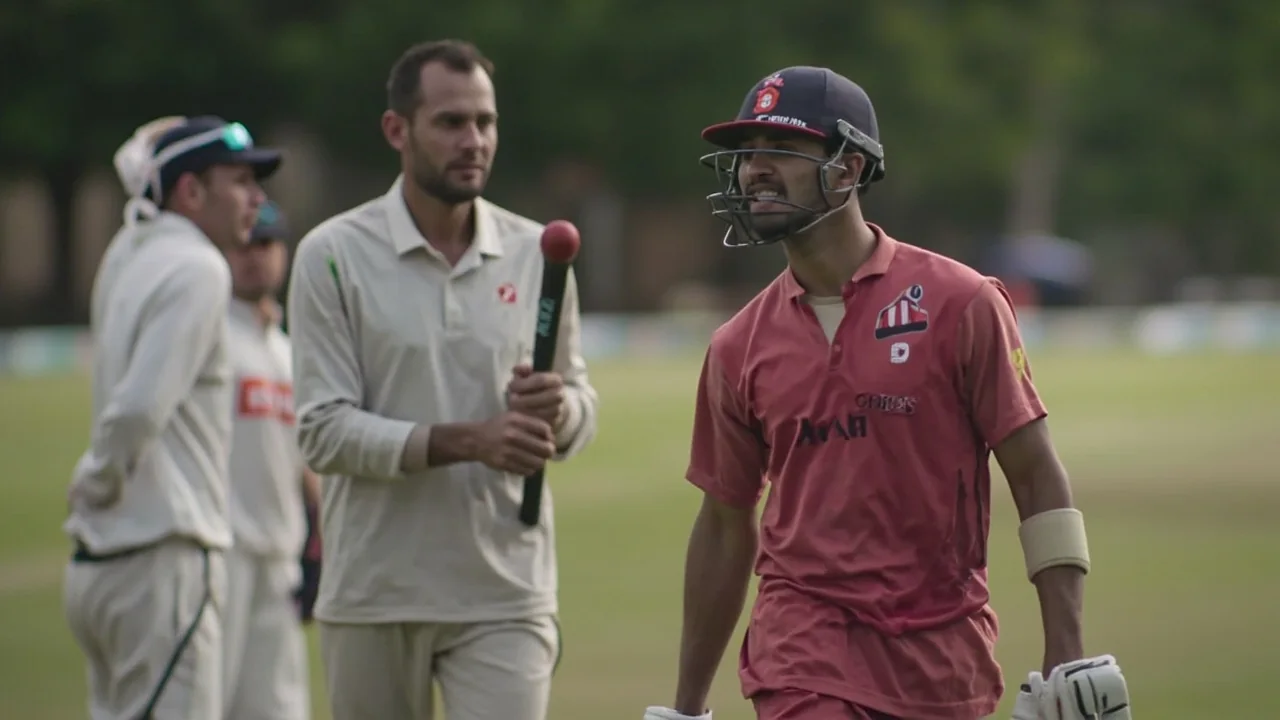
Zimbabwe's reply began with intent. Brian Bennett drove the first over through the off side and took 12 off it, and for three overs the chase looked like it might force a contest. Bennett's stay was, in the words of the post-match note, "cut short" — caught at cover off a slower one — and the partnership that was threatening to build was broken in the seventh over rather than the fifteenth. From there, wickets fell at intervals the batting side could not absorb.
How India's wickets were shared
- Abhishek Sharma — 3 wickets (left-arm spin, middle phase)
- Yash Thakur — 2 wickets (powerplay and death)
- Prince Yadav — 2 wickets (middle phase, change of pace)
- Zimbabwe bowled out for 129 in 18.2 overs · India won by 90 runs
Three wickets, two wickets, two wickets — that is the kind of distribution fantasy captains usually chase when they pick a bowling stack. India got it on Saturday without picking a bowling stack at all. Abhishek's spell was the difference between a bowling card spread across six names and one concentrated enough to plan around.
Why the figure matters for fantasy players
Indian selectors rarely give openers a four-over T20I quota. When they do, it is because the rest of the bowling card has either been hit or is being protected for a chase. The fantasy implication is sharp: a bowler who is going to get one or two overs in a typical T20I is, on most platforms, not worth a captain pick. A bowler who is going to get all four because the team needs him is a different category entirely.
Abhishek Sharma now sits in that second category. Even if Saturday was an outlier — a Mashonaland evening, a part-time spinner given four overs because the chase was slipping — the fact of the spell changes how a fantasy reader weighs his profile. He remains a top-order batter whose primary job is the powerplay. But the part-time bowling line is no longer theoretical. It produced a record, and on a platform like the IPL it is exactly the kind of cross-discipline entry that pushes a player up the credit ladder for the next fixture window.
The second-order fantasy reading is about the captaincy frame. When a part-time bowler is asked to bowl in the middle phase, the captain has usually read the chase as winnable without him and wants the spinner to take wickets rather than contain. That is also the phase where captain-pivot picks on fantasy platforms tend to swing hardest: if the bowler is in the contest, his captain pick is paying off either as a batting multiplier (because he is in your XI as a batter) or as a bowling surprise (because he is in your XI as a bowler). Abhishek's day was both at once. That is rare, and the record book now records it.
What the series result tells us about the rest of the tour
India's 2-0 lead in the three-match T20I series leaves the third game in Harare on 27 July as a chance for the visitors to either rest frontline bowlers or to extend form lines. Zimbabwe, with Bennett back in the sheds and the middle order having collapsed twice in three days, will be looking at combinations more than records. The biggest series-level takeaway is that India's batting depth held against new-ball pressure — both innings started on 20 for 2 or worse before recovery — and that the bowling attack shared wickets across six names rather than leaning on a Jasprit Bumrah-style match-winner.
For the larger squad picture, Abhishek's spell is also a quiet audition note. With the Asia Cup window opening later in the cycle, an opener who can deliver a four-over quota against quality opposition gives the captain an option most top-order batters in the world cannot match. The bar is low — three wickets in a T20I is not a match-defining return in isolation — but the bar for "Indian opener who bowls" has been even lower until now.
Open questions the next match will answer
Three things to watch on 27 July in Harare. First, does Abhishek get the ball in the powerplay this time, or does the captain hold him back for the middle phase again? Second, can Kishan and Varma turn two good knocks into a consistent opening partnership, or does the team management look for a different top-order shape? Third, does the Indian bowling attack — now without a frontline wrist-spin match-up option — find a way to dismiss Bennett and the Zimbabwe middle order before the partnership builds?
None of those questions needs a story. The scorecard and the next set of figures will answer them on their own. For fantasy players weighing the third T20I, the read is unchanged from Saturday: India are favourites, the batting depth is the strongest line, and the bowling is shared enough that picking one name over another is a credit-allocation problem rather than a captaincy conviction. The one new variable is the part-time option who, on this evidence, may quietly start taking up more of the quota than the card suggests. For broader match briefs and captaincy frames from the same desk, start at IPL Today Fantasy.