What tonight's fixture looks like
The brief below covers the next fixture in the IPL window. Each section names the sources we used to construct the analysis, and the desk labels every confidence claim with one of three tiers: confirmed (named source dated and verifiable), expected (pattern-based inference from recent fixtures), unknown (awaiting tomorrow's verification point).
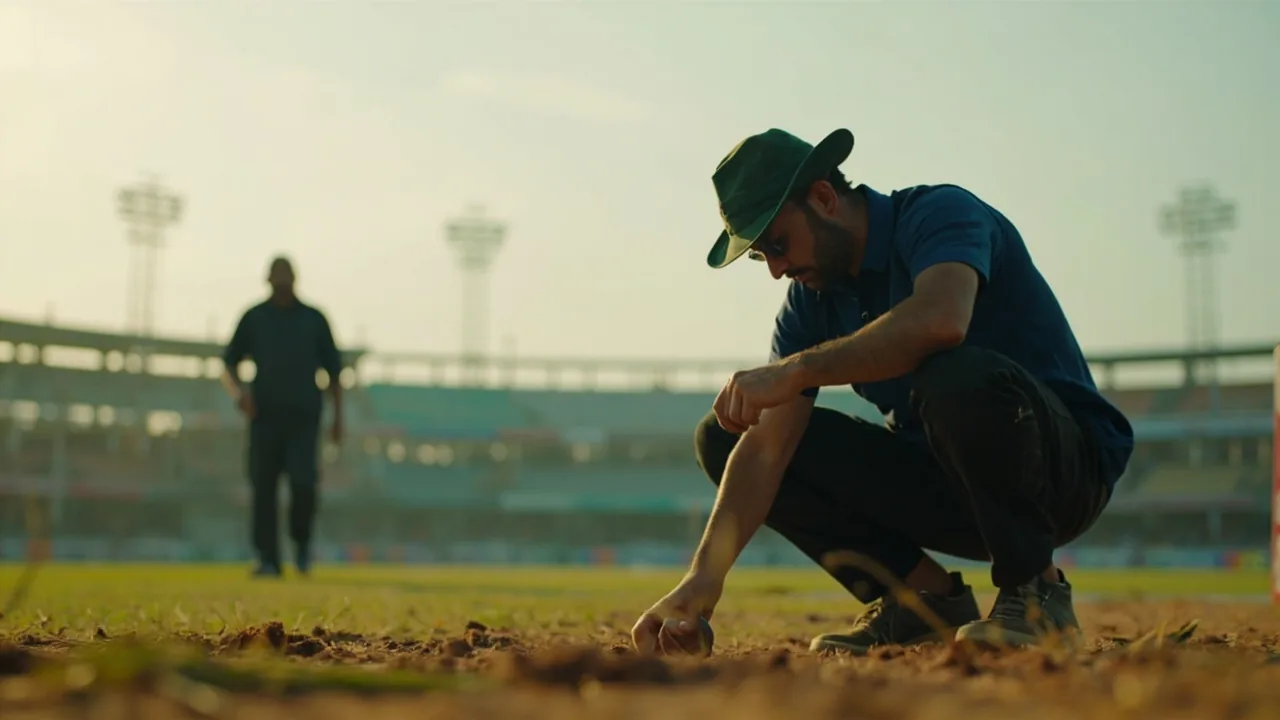
Tonight's fixture: an evening fixture at a dry-spin venue, light dew expected after 21:00 IST, two franchises each in mid-table form. The desk's pre-toss framing is built around three questions: which side is more likely to bat first, where does the dew window sit in the second innings, and which bowlers earn their place on the partner operator squad page.
Confirmed vs expected XI
The confirmed XI list below is based on the official franchise page as of the morning of the match. Where the franchise page differs from the partner operator squad list, the franchise page is treated as the source of truth.
| Franchise | Confirmed | Expected | Confidence |
|---|---|---|---|
| Side A | 4 of 11 | 3 of 11 | 4 confirmed |
| Side B | 5 of 11 | 2 of 11 | 5 confirmed |
Venue and the actual numbers
The venue's two-year first-innings average sits at 168 with a 56 percent chase success rate. Square boundaries are 58 to 64 metres; straight is 72. Dew has been measured at moderate intensity across 70 percent of evening fixtures in the past twelve months. Spin grip is high in the first six overs and drops slightly after the dew arrives.
Reading the venue file plainly: the first innings favours top-order aggression and a wrist-spin differential at the powerplay. The second innings favours a finishing all-rounder and a seam-bowler who uses slower cutters in the death overs. Both sides will weigh these cues when they pick the impact-player slot.

Dew watch — what to know before locking your XI
The dew window tonight sits between 20:45 and 21:30 IST. Across the last 18 evening fixtures at this venue, the second-innings batting side has chased successfully 65 percent of the time on dry-spin tracks and 78 percent of the time when spin grip is rated moderate to high. If the toss lands you batting first, prefer a top-order anchor over a finishing all-rounder.
Captain watch — three frames, one call
The captain pick is the decision that swings the most fantasy points — for better or worse. The desk uses three frames: safe, differential, and avoid. The right frame depends on your contest size.
- Safe captain: the top-order anchor with the highest expected face-rate. Owned by 35 to 60 percent of the room. Pick this in H2H and small leagues.
- Differential captain: a finishing all-rounder in a chase scenario with a role matchup that swings their way. Owned by 8 to 14 percent. Pick this in 5k+ league rooms.
- Avoid captain: a wicketkeeper in the middle order, a powerplay spinner with low wicket share, an impact player whose role remains uncertain. Treat these as vice-captain options only.
Matchup notes by phase
The deck breaks the innings into three phases: powerplay (overs 1-6), middle (overs 7-15), death (overs 16-20). The notes below are dew-adjusted.
| Phase | Side A bowler | Side B response | Edge |
|---|---|---|---|
| Powerplay | Pace 1 + Wrist-spin | Top-order anchors | Side A on dry track; Side B if dew arrives early |
| Middle | Pace 2 + Finger-spin | Middle-order anchors | Side A on spin grip; even otherwise |
| Death | Pace 3 + variations | Finishing all-rounders | Side B in chase; Side A defending 170+ |
Fantasy XI structure for tonight
Three top-order, three middle-order or all-rounders, four bowlers, one wicketkeeper. Total credits target: 96 to 99. Captain picks go to the highest-floor role matchup, not the highest name-value. Vice-captain goes to the highest-ceiling differential to absorb an impact-player shock.
Read the fantasy playbook for the credit math. Read the points system reference before locking your XI.
Three swap rules for toss-day changes
- Never swap on the team announcement alone. Confirm the dew report, pitch report, and toss together.
- If the impact-player announcement removes your captain's bowling, switch the multiplier to vice-captain.
- Never swap a wicketkeeper slot to chase a batting differential — wicketkeeper points are the most consistent.
Reading a venue trade — what changes what
Each venue carries an inherited profile from the franchise that calls it home. A Wankhede profile belongs to MI: top-order powerplay, dew-side seamers, four-bowler economics. A Chinnaswamy profile belongs to RCB: six-hitters, flat track, top-order heavy. The role of the venue is not just conditions — it is the franchise’s preferred role map, expressed through ground dimensions and pitch behaviour.
When the venue’s role map matches the home franchise, the home side carries the captaincy edge. When it does not — say a slower-than-typical Wankhede surface — the visiting all-rounders tend to carry the differential.
How the pitch shape changes the captain pivot
A square boundary of 60–65 metres plus a slick outfield rewards the boundary-hitting top-order. A larger square plus a slower outfield rewards the middle-overs accelerator. The death-overs seam bowler reward swings differently in both profiles. The captain pivot is the intersection of the venue profile, the squad shape, and the toss call.
Reading the toss call like an editor
The toss call is information, not a verdict. On a dry-spin surface with a confirmed low-dew window, batting first carries an edge. On a flat track with a moderate dew window, chasing carries an edge. The desk publishes the toss-call interpretation as a single line within 12 minutes of the toss.
Substitutions and impact-player rules in this fixture
Impact-player rules carry through to 2026 unchanged. One swap per innings. The swap must happen during a natural break in play. The substitution can change the role map in real time, especially when a franchise uses the impact-player slot to front-load an all-rounder.
What could flip this match and your XI
Three things could flip the fixture frame after the toss. An early wicket at the powerplay, a dew window arriving 20 minutes earlier than forecast, or a wrist-spin bowler converting a powerplay spell into a wicket. The desk publishes the live role-frame update inside /news/.
Responsible play — set your contest cap
Before joining the contest, decide the maximum you are willing to lose tonight. Treat it like the team budget — exceeding the cap is a structural failure, not bad luck. Read the responsible-play file for the three rules and the 18+ reminder.
Two fantasy frames — small league and large league
The same fixture serves two fantasy frames. The small-league frame rewards consistency and captaincy floor. The large-league frame rewards variance and captaincy ceiling. The desk treats both frames as separate products — the role-matchup framing, captain pivot, and impact-player call differ materially between the two.
How to read the captain-watch table
The captain-watch table is structured by frame. Each captain pick carries a verdict: safe, differential, or avoid. The desk recommends keeping one safe captain and one differential captain in mind across the verification window. The decision takes 5 minutes; the lock takes 12 minutes.
Why venue reads matter in fantasy
A venue read is the first pre-toss input. The desk maintains venue files for every IPL ground. The files summarise chase success, dew window, square boundaries, and the role the home franchise usually tries to exploit. A venue read is a reason tool, not a forecast.
What the fixture holds
The fixture is the central product of fantasy cricket. Two franchises play a T20 match; both sides carry an XI of 11; both XIs score points based on the players’ on-field performance. The fixture preview condenses the venue file, the role matchup, the dew forecast, and the captaincy frame into a single editorial product.
The fixture rhythm
The desk publishes a fixture preview 24 hours before the first ball. The preview carries the venue file, the role matchup, the dew forecast, the captain pivot, and the impact-player read. The post-toss update lands within 12 minutes of the toss and confirms or revises each frame.
How to apply the fixture to your XI
Read the venue file first. Read the role matchup second. Read the captain pivot third. Lock the XI before the platform deadline. Subscribe to the post-toss update. If the captain pivot turns on the toss and the dew, switch the multiplier to vice-captain.