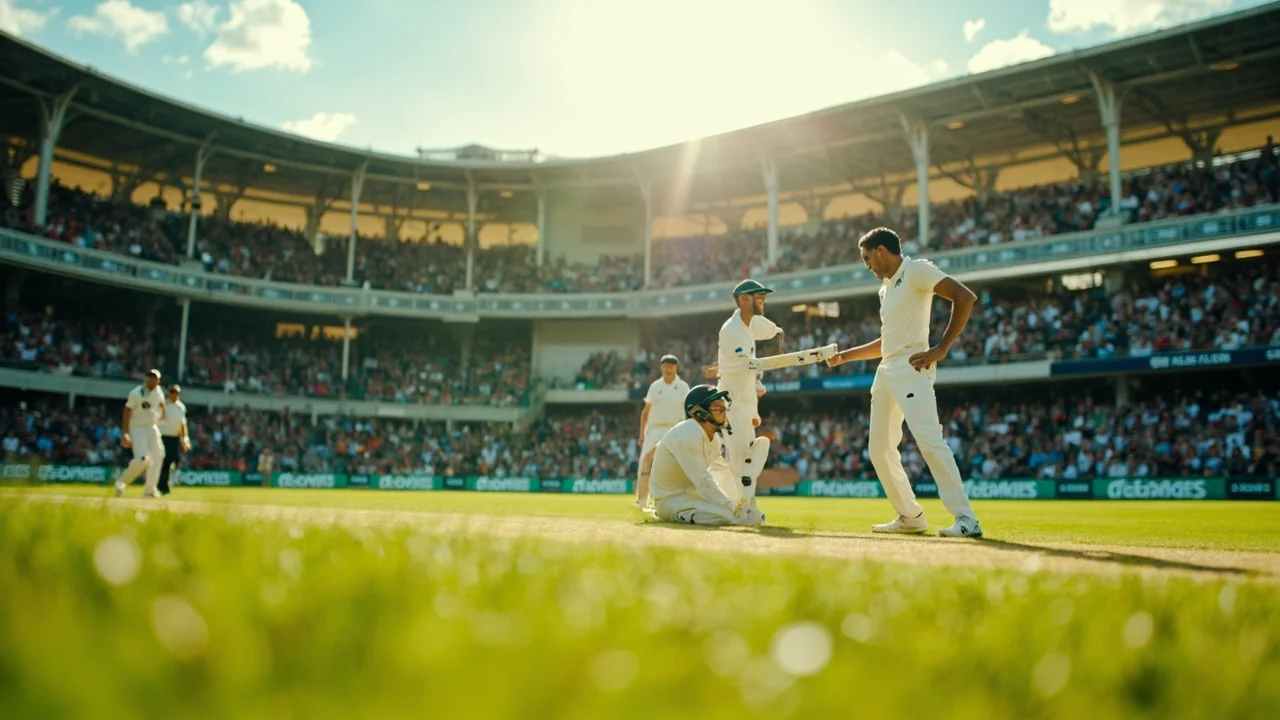
Kranti Gaud took 5 for 37 on Test debut and Yastika Bhatia scored 113 in India’s second innings as India Women contested the first women’s Test at Lord’s in 2026. Those two lines became the first Indian women’s entries on the Pavilion honours boards. In the same cycle, Rohit Sharma’s 110-ball 138 was recorded as the only Indian ODI century on the boards so far.
That triple addition is the verified news spine of the list. The boards still hang inside the home and away dressing rooms at Lord’s Cricket Ground — the Home of Cricket — and they still only accept a completed century, five wickets in an innings, or ten wickets in a match. A brilliant 99 or a four-for leaves no mark.
India have now played 20 Tests at Lord’s, a run that began with the country’s first international appearance in 1932 and now includes that first women’s Test. Across the full span, from Mohammad Nissar’s new-ball five-for in 1932 through modern seam and the 2026 women’s breakthrough, only a short club of Indian names has cleared the threshold.
What the Lord's honours boards actually record
The boards hang inside the Pavilion dressing rooms — separate walls for the home and away sides. In Tests they mark three kinds of individual performance: a century, five wickets in an innings, and ten wickets in a match. The rule is simple and unforgiving. A brilliant 99, a four-for that swings a session, or a career of near-misses leaves no mark. The boards do not grade reputation. They grade a single, completed threshold at that ground.
Since 2019 the venue has also kept ODI honours boards, so limited-overs centuries and five-wicket hauls can sit alongside the Test list. That change opened the door for both men and women in the 50-over game. Even so, Indian names on the ODI boards remain scarce. Rohit Sharma’s 110-ball 138 is the only Indian ODI century recorded there so far. No Indian bowler — men’s or women’s — has yet posted a five-wicket haul in an ODI at Lord’s on those boards. Since the ODI boards were introduced, India have played three men’s ODIs at the ground.
That narrow filter is why the list below still reads short after nearly a century of Indian visits. It is also why each new entry still lands as news rather than routine housekeeping.
How the 2026 women’s Test forced the wall open
The match itself was already historic as the first women’s Test at the ground. The boards made that history permanent. Gaud’s five-wicket haul in England’s first innings put a woman’s name on the bowling board; Bhatia’s second-innings hundred did the same for batting. Neither entry needed a special exemption. Both cleared the same thresholds the men’s boards have used for generations.
The longer Indian line still starts with Nissar’s new-ball spell in 1932. What changed in 2026 is representation inside that line: a women’s Test century and a women’s Test five-for now sit beside the older names, so the Indian column is no longer a closed men’s Test story for anyone reading the wall.
Indian batters on the Lord's honours board
The batting list runs from Vinoo Mankad’s 184 in 1952 to Rohit Sharma’s ODI hundred in 2026. Between those bookends sit a thin spine of Indian centuries — some from established middle-order anchors, one from a nightwatchman-style all-rounder who refused to play small, and one from a debutant captain-in-waiting who announced himself on English grass.
One name still stands apart. Dilip Vengsarkar is the only Indian with three Test centuries at Lord’s. His scores of 103, 157 and 126 not out arrived across 1979, 1982 and 1986, including back-to-back hundreds in the first two of those visits. No other Indian batter has matched that frequency at the ground.
The only other Indian with multiple Test hundreds at Lord’s is KL Rahul: 129 in 2021 and 100 in 2025. That double entry places him in a different conversation from one-off centurions. Consistency across separate England tours, at a venue that rarely gifts easy tempo, is rarer than a single peak afternoon.
Yastika Bhatia’s 113 in 2026 adds the first women’s Test century to the Indian batting column. Rohit Sharma’s 138 in 2026 is the first Indian ODI hundred on the boards and, for now, the only one.
Indian batting entries (as recorded)
- Vinoo Mankad — Test 184 vs England, 1952
- Dilip Vengsarkar — Test 103, 157, 126* vs England, 1979 / 1982 / 1986
- Gundappa Viswanath — Test 113 vs England, 1979
- Mohammed Azharuddin — Test 121 vs England, 1990
- Ravi Shastri — Test 100 vs England, 1990
- Sourav Ganguly — Test 131 vs England, 1996
- Ajit Agarkar — Test 109* vs England, 2002
- Rahul Dravid — Test 103* vs England, 2011
- Ajinkya Rahane — Test 103 vs England, 2014
- KL Rahul — Test 129 and 100 vs England, 2021 / 2025
- Yastika Bhatia — Test 113 vs England, 2026
- Rohit Sharma — ODI 138 vs England, 2026
Read as a set, the batting names cluster around a few kinds of innings. Mankad’s 184 still anchors the high score. Ganguly’s 131 on Test debut in 1996 remains the classic “arrival” century. Agarkar’s unbeaten 109 in 2002 is the reminder that a lower-order player can force the wall to take a bowling specialist’s name for batting. Dravid’s unbeaten 103 in 2011 fits the long defensive craft the ground often demands. Rahane’s 103 in 2014 came on a green-tinged surface that rewarded patience more than flourish.
What the list does not do is flatter every great Indian career. Plenty of celebrated batters have walked out at Lord’s and left without a three-figure line. That absence is not an argument against those careers. It is evidence of how tightly the boards are drawn: one ground, one threshold, no averaging across tours.
Indian bowlers on the Lord's honours board
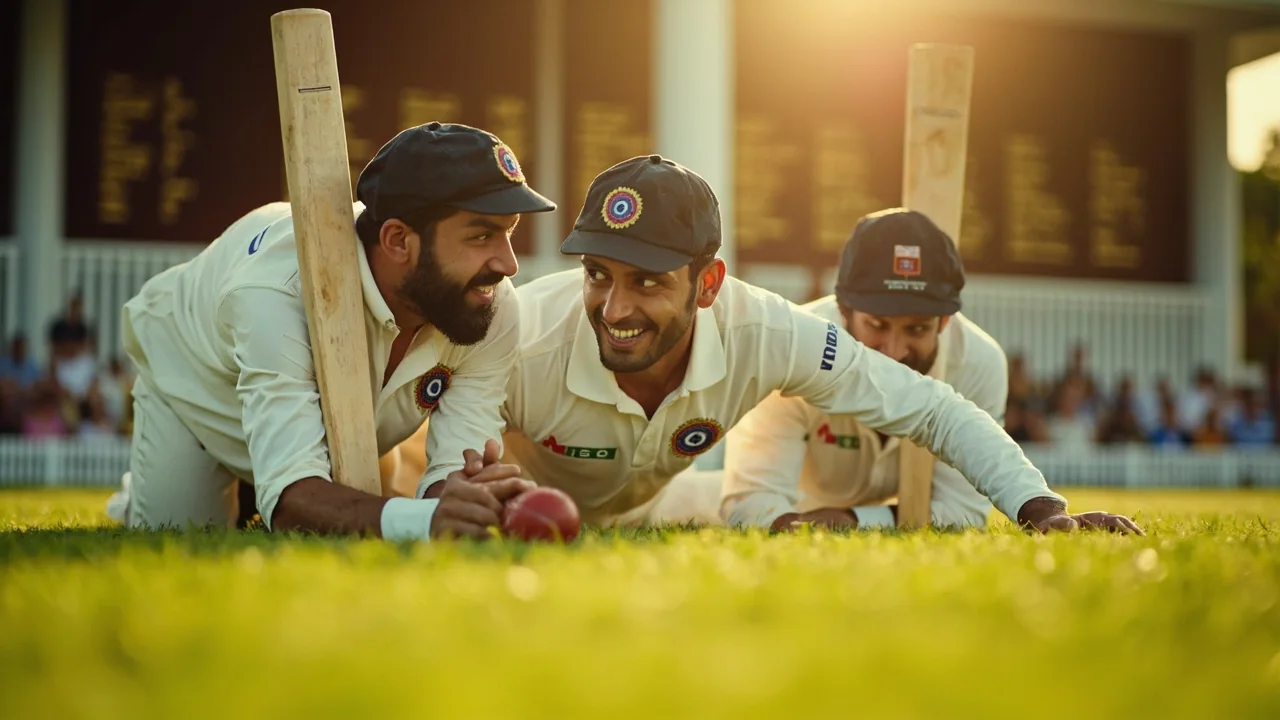
India’s first Test at Lord’s in 1932 already produced a bowling entry. Mohammad Nissar took 5 for 93, and the Indian bowling column has filled more steadily than the batting one ever since. Seam and spin both appear. So do short bursts of heavy damage and long, attritional spells that still cleared the five-wicket bar.
Kranti Gaud’s 5 for 37 in 2026 made her the first woman on that bowling board. Ishant Sharma’s 7 for 74 in 2014 remains one of the sharpest fast-bowling returns by an Indian at the ground — a spell still cited whenever the conversation turns to Indian pace succeeding in English conditions rather than merely surviving them. Bhuvneshwar Kumar’s 6 for 82 in the same 2014 match gave India two separate bowling lines from one Test. Jasprit Bumrah’s 5 for 74 in 2025 is the most recent men’s five-for on the list before Gaud’s breakthrough.
Indian bowling entries (as recorded)
- Mohammad Nissar — Test 5/93 vs England, 1932
- Amar Singh — Test 6/35 vs England, 1936
- Lala Amarnath — Test 5/118 vs England, 1946
- Vinoo Mankad — Test 5/196 vs England, 1952
- Ramakant Desai — Test 5/89 vs England, 1959
- BS Chandrasekhar — Test 5/127 vs England, 1967
- BS Bedi — Test 6/226 vs England, 1974
- Kapil Dev — Test 5/125 vs England, 1982
- Chetan Sharma — Test 5/64 vs England, 1986
- Venkatesh Prasad — Test 5/76 vs England, 1996
- RP Singh — Test 5/59 vs England, 2007
- Praveen Kumar — Test 5/106 vs England, 2011
- Bhuvneshwar Kumar — Test 6/82 vs England, 2014
- Ishant Sharma — Test 7/74 vs England, 2014
- Jasprit Bumrah — Test 5/74 vs England, 2025
- Kranti Gaud — Test 5/37 vs England, 2026
Two structural notes jump out. First, Vinoo Mankad appears on both the batting and bowling boards from the same 1952 engagement — 184 with the bat and 5 for 196 with the ball. Dual membership of that kind is rare in the wider Lord’s record and unique among Indians on the published list above. Second, the bowling column is denser with seamers from the modern era (Praveen Kumar, Bhuvneshwar, Ishant, Bumrah, Gaud) while still carrying the classical spin entries of Chandrasekhar and Bedi. The boards do not prefer a method. They only prefer a completed five-wicket innings or ten in the match.
Amar Singh’s 6 for 35 in 1936 remains one of the most economical-looking heavy hauls on the Indian list. Bedi’s 6 for 226 in 1974 shows the other extreme: a six-for earned the hard way across a long English batting day. Both count the same on the wall.
Why the Indian list stays short
India’s 20 Tests at Lord’s sound like a deep sample until the threshold is applied. A player can own a series elsewhere in England and still miss the Pavilion boards entirely. Tours are finite. Conditions swing. Selection can hand a batter one innings on a moving morning and a bowler a dead afternoon. The boards ignore the near miss and the moral victory. They wait for the round number.
That is also why new entries still travel quickly through Indian cricket conversation. When KL Rahul added a second Lord’s hundred in 2025, he joined a two-name subset rather than padding a long queue. When Bumrah took 5 for 74 the same year, he extended a bowling lineage that started with Nissar rather than opening a new one. When Gaud and Bhatia joined in 2026, they did not merely “also appear”; they changed who the Indian column can represent.
Rohit’s ODI 138 sits in a still thinner compartment. Three men’s ODIs at the ground since the ODI boards began is not a large opportunity set. One Indian century from that set underlines how little margin the limited-overs board has offered Indian batters so far — and how completely the bowling five-for column in ODIs remains empty for India.
Reading the names together
Laid side by side, the Indian batting and bowling entries tell slightly different stories. The batting board is dominated by players who found a long innings against English seam and the slope. Vengsarkar’s triple, Rahul’s double, Ganguly’s debut statement, Dravid’s unbeaten hundred, Rahane’s 2014 grind, Bhatia’s 2026 hundred and Rohit’s white-ball 138 are different answers to the same problem: how to build a score at a ground that rarely offers pure batting days.
The bowling board is a longer chain of new-ball and stock-ball craft. Nissar and Amar Singh open it in the 1930s. Amarnath, Mankad and Desai carry the middle century. Chandrasekhar and Bedi prove spin can still force five-fors at the venue. Kapil, Chetan Sharma and Prasad bridge into the television era. RP Singh, Praveen Kumar, Bhuvneshwar, Ishant, Bumrah and Gaud bring the list into the present tense, with Ishant’s seven-for still the standout raw return among the modern men.
For fantasy readers and form trackers who usually live inside T20 windows, the Lord’s boards are a useful corrective. They reward a different timescale: session control, repeated lengths, and the patience to turn a good spell into a five-wicket line. That is not an argument for copying Test heuristics into every IPL lock-in. It is a reminder that Indian cricket’s memory still keeps a separate ledger for performances that clear a hard bar at one specific ground. For broader match briefs and captaincy frames from the same desk, start at IPL Today Fantasy.
What to watch on the next Indian visit
Three open questions hang over the next India engagement at Lord’s. First, can another batter join Vengsarkar and Rahul on the multiple-century shortlist, or will the batting board keep adding one-off names? Second, will an Indian bowler finally claim an ODI five-for at the ground now that white-ball boards exist, or will Rohit’s century remain the lonely limited-overs Indian entry for another cycle? Third, after Gaud and Bhatia’s 2026 breakthroughs, how quickly does the women’s column grow on subsequent tours?
None of those questions needs myth-making. The boards will answer them the same way they always have: only when someone clears the number. Until then, the Indian list remains a compact, carefully earned set of lines — Nissar to Gaud on the bowling side, Mankad to Rohit and Bhatia on the batting side — painted where every visiting team still dresses for the day’s play.